

How to Rank Higher on Google Maps
Before you hire anyone, understand what Google is actually choosing between. This page explains the mechanism.
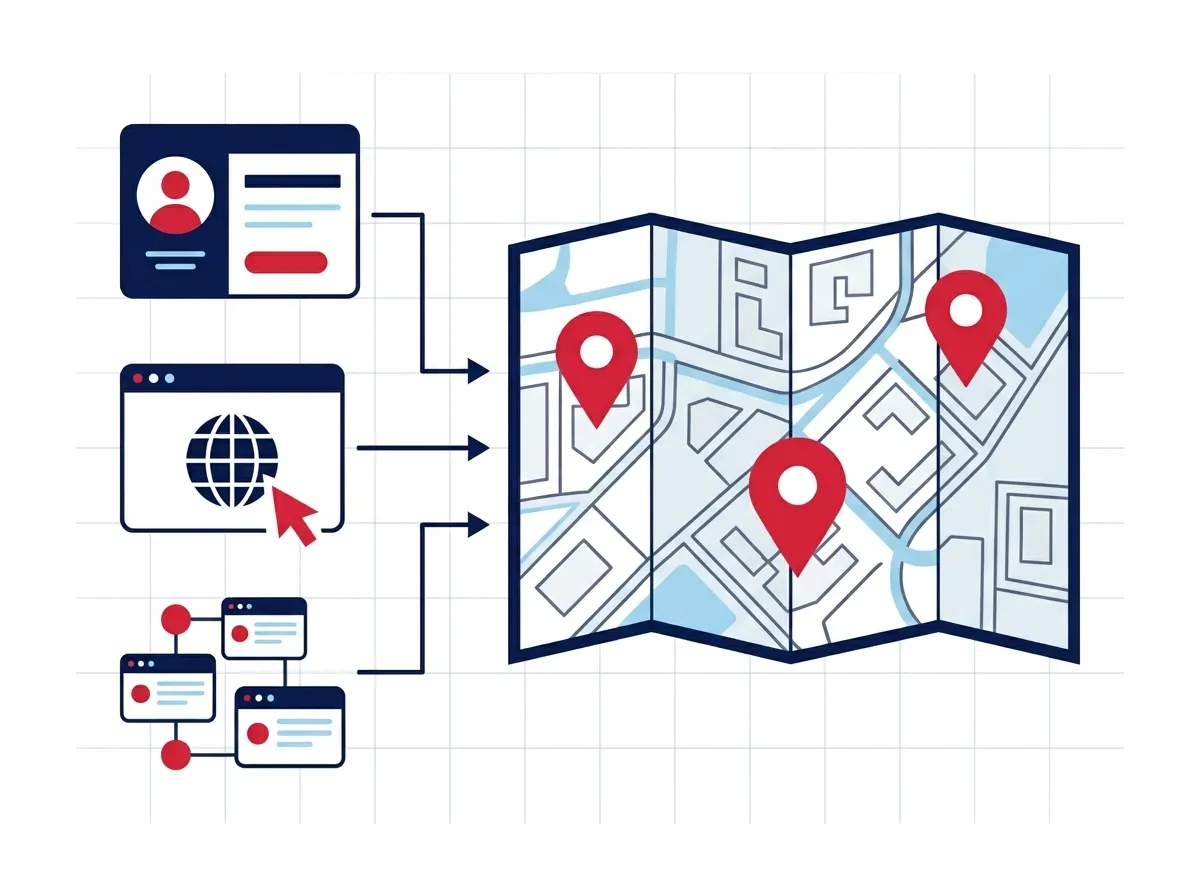
Google ranks map results on three things: relevance, distance and prominence. Relevance is how well your profile matches the search. Distance is how far you are from the searcher. Prominence is how well known your business is, measured through reviews, citations and your website.
The three things Google is weighing
Relevance is the one you control most directly. It comes from your primary category, your secondary categories, the services listed on your profile and the words on your website. A business whose category is wrong is invisible for searches it should own, and no amount of review volume fixes that.
Distance is the one you control least. Google measures from wherever the searcher is, or from the area named in the search. You cannot move your premises, but you can decide which searches you realistically compete for and stop spending on the ones geography has already lost.
Prominence is where most of the work happens. It is built from review volume and recency, from consistent listings across the directories Google trusts, and from a website that actually explains what you do. Prominence is slow, and it is the reason established competitors are hard to displace.
Why the map pack has only three slots
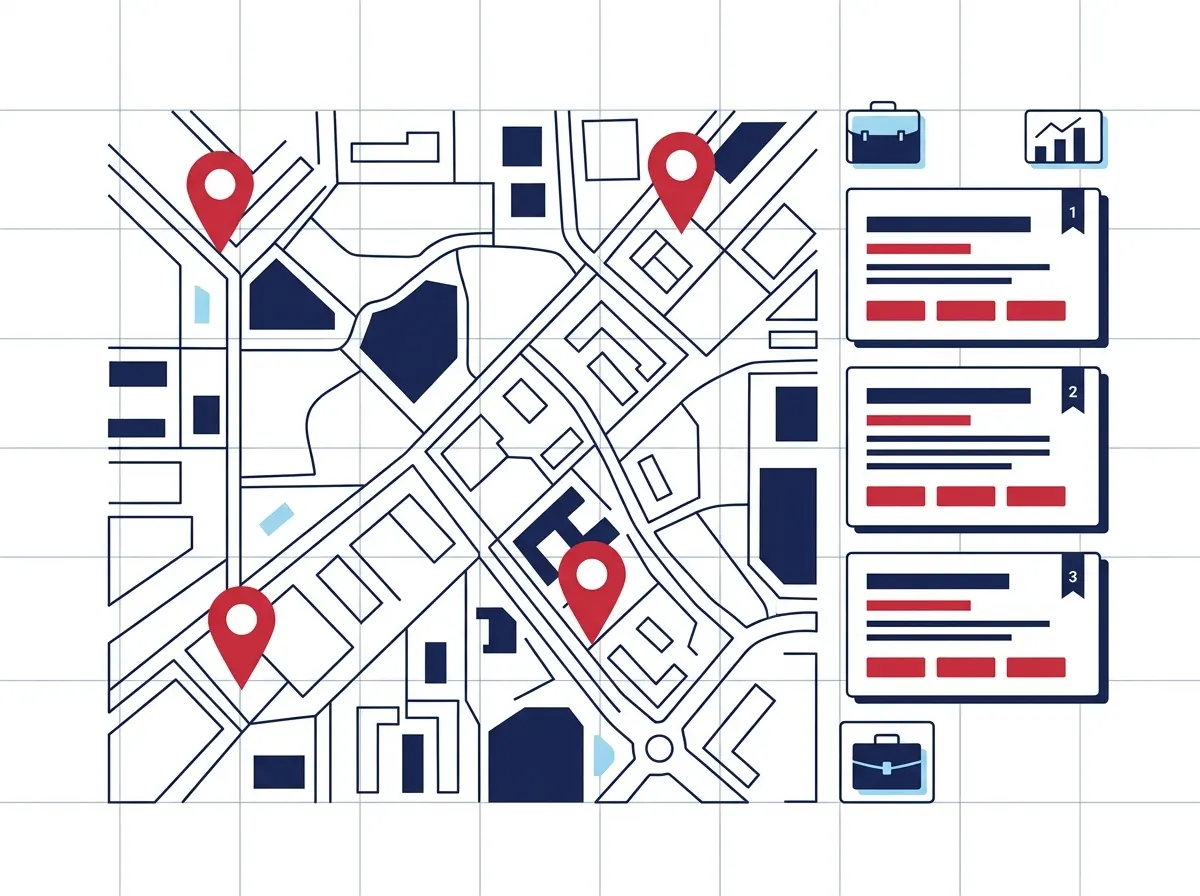
The map pack is the block of three local results Google shows above the ordinary blue links. Almost every local search on a phone shows one, and most people never scroll past it. That is why a business can rank fourth and still feel invisible.
Ranking fourth is not a small gap. It is the difference between appearing on the first screen and requiring a deliberate tap on a link that says more places. Moving from four to three is usually the single highest value change a local business can make.
Why your business might not show up at all
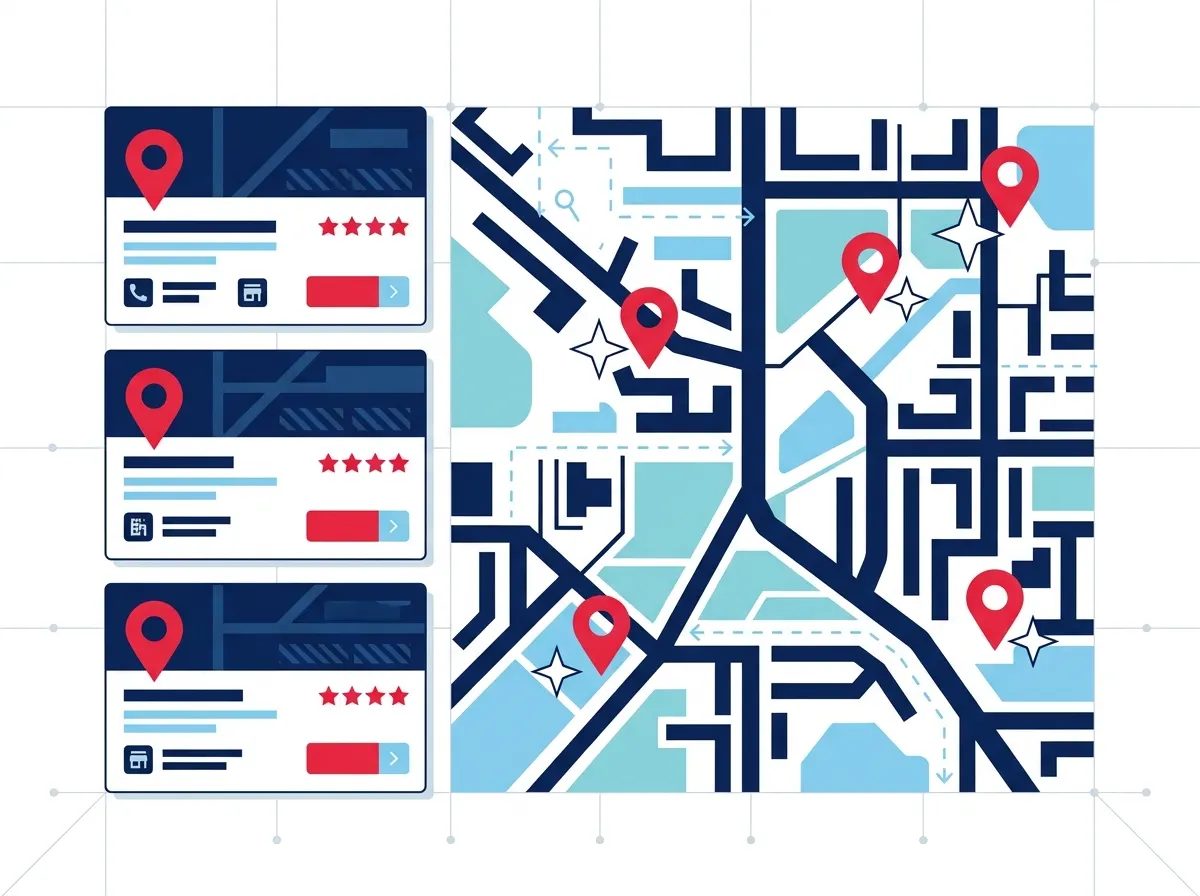
There are four common reasons. The profile is unverified or suspended. The primary category does not match what people search for. The business information disagrees between your profile, your website and the directories. Or the business is simply too far from where the searches happen.
The first three are fixable and usually in that order. The fourth is not fixable by marketing, and an honest agency will tell you so before it takes your money.

What a Google Maps ranking service actually does
It corrects the profile, cleans up the listings that disagree with each other, builds the review process, and writes the pages that make your website a credible source about your own services. Then it measures the result across your whole service area rather than at one point.
None of that is a trick and none of it is instant. Anyone promising a top three position in a fixed number of days is selling you a guess, because Google reranks continuously and the competition is doing the same work.

The fastest way to see where you actually stand is to look at a scan of your own market.
What our team can actually evidence
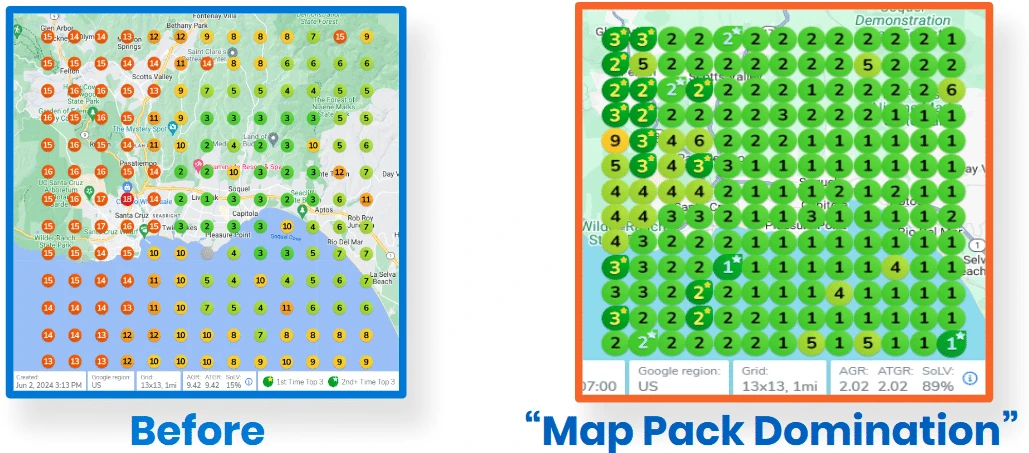
- General contractor: a full green GeoGrid across Las Vegas after 7 months, delivered by our team at Digital Domination.
- Coin and gold dealer: visible results inside the first month, delivered by our team at Digital Domination.
- Barbershop: booking inquiries from 14 to 58 a month, and payback in under four months, as the owner reported, delivered by our team at Digital Domination.
- Electrical contractor: $709,505 in added revenue in 8 weeks, cost per lead down 74%, delivered by our team at Digital Domination.
Results shown are from real Digital Domination client engagements. They are not typical and are not a promise of similar outcomes. Results vary by market, competition and how fully a program is carried out.
Frequently Asked Questions
How does Google decide the map pack order?
On relevance, distance and prominence. Relevance is how well your profile and website match the search. Distance is how far you are from the searcher. Prominence is how established your business appears, from reviews, citations and your site. All three apply at once.
How long does it take to rank higher on Google Maps?
Profile and category corrections can move things within weeks. Prominence takes months, because review volume and citation consistency build slowly. Anyone quoting a fixed number of days for a top three position is guessing.
Why does my business rank well at the shop and badly across town?
Because distance is a live ranking factor. Your position changes with the searcher's location. That is why a single ranking number is misleading, and why coverage should be measured across a grid of points instead.
Can I rank in a city where I have no address?
Not in the map pack for that city, in most cases. Map results favour businesses near the searcher. You can rank in ordinary organic results for a nearby city, but a page claiming an address you do not hold is a suspension risk.
Do reviews really change map rankings?
They contribute to prominence, alongside citations and your website. Volume, recency and whether you respond all play a part. Reviews alone will not rescue a profile in the wrong category, which is why sequence matters.
Get a straight answer about your own listing
Call now and we will look at it with you, or run the free GeoGrid scan and bring the result to the conversation.